HOLIDAY SHOPPING

Photo by Satoshi Hirayama on Pexels.com

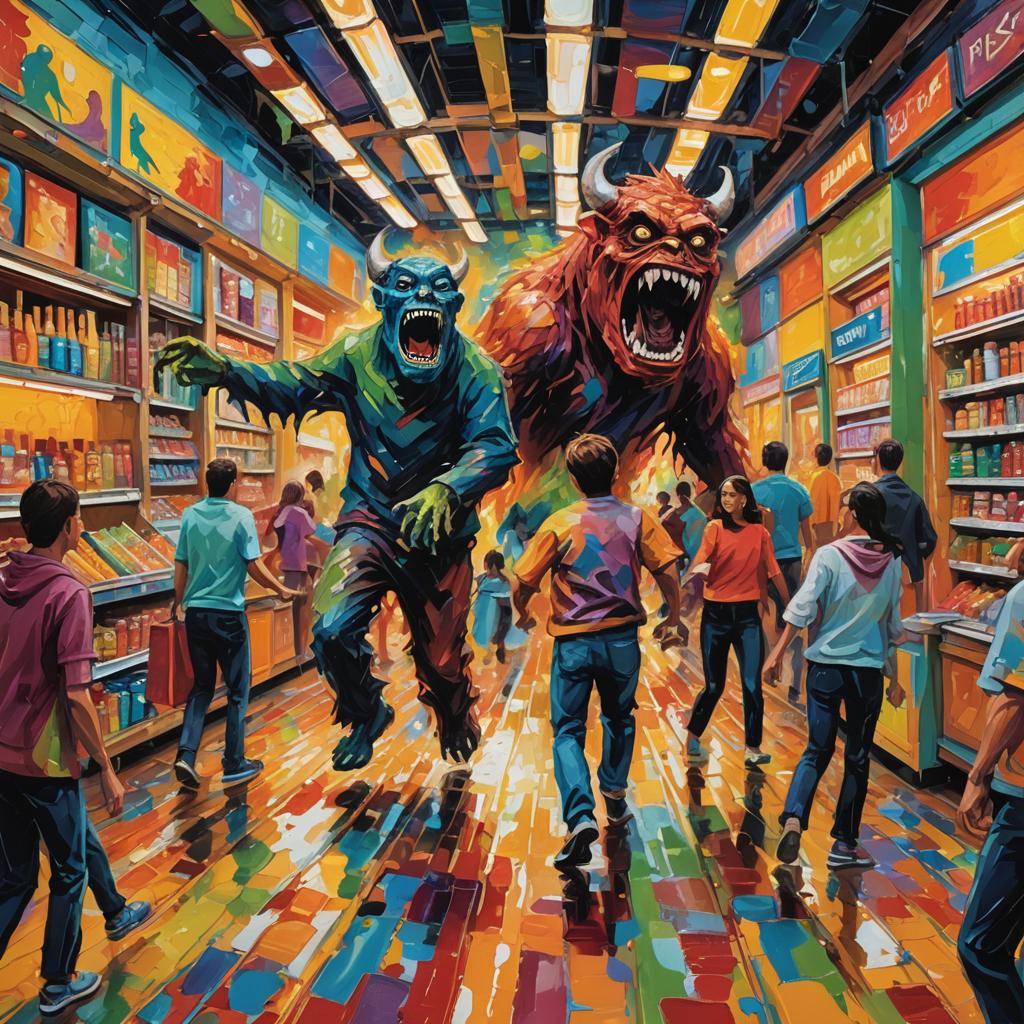
How jolly I am feeling!

As I toss people aside the aisle

You better get out of my way today

Hilfiger puts me on to style

How merry ’tis the prices

There’ll be no sticker pain

This old chap’s trying to get the last LCD TV!

I think I’ll trip his cane

How joyfulness is revealing

As I wait for them to open the place

You’d better stay away from my iPad Buddy!

Else I’ll spray you

With some Mace!


SHAZAM!

Photo by Porapak Apichodilok on Pexels.com

Growing up in Astoria, Queens in New York City in the 1970s; I looked up to my father as most all young boys are want to do.

He drew me into some of his favorite lifelong passions, such as New York Yankee baseball, Humphrey Bogart and James Cagney movies.

There was also a colorful, and at that time unknown to us, super hero character that while similar to Superman in strength and powers, was a completely different good guy as far as origin story and villains.

Captain Marvel was my dad’s favorite superhero.

My twin brother and I were somewhat blindsided when after mom scolded us for spending our daily dollar for the weeks church donation on comic books; dad sidled up to us and told us that he had a surprise to show us.

We were no more than ten years old at the time and had been saving our dollar church donation allowance secretly each week to use at the nearby candy/comic book store.

What joy we felt as we would gaze upon the rows of freshly minted comic books in the candy/comic book store’s custom made wooden display!

There was even a wonderful smell that the new comic books would give off. That gave you a clue as to how many of them were available for that particular day.

Marvel Comics was just starting to gain popularity with kids my age back then and was nowheres near the powerhouse global brand that it is today.

Well, I guess my dad seeing our newly founded level of interest in comic books decided that this was the time to show us his collection. Unbeknownst to us, he had kept hidden in one of the apartment’s closets.

And boy! what a collection it was.

We were amazed as he pulled out large comic books, much bigger than the ones we were used to buying, of the original Superman, Batman and Hawkman!

He even had an Origins comic book that featured older comic book heroes like the Flash!, and some of whom we had never even heard of, like the Phantom and Spy Smasher.

Last but not least, he showed us his beloved Captain Marvel comic books.

This he proclaimed proudly was his favorite superhero, and instantly my twin brother Mark and I, slotted Captain Marvel alongside Thor as our favorite’s too.

Captain Marvel to our surprise was just as powerful as Superman. One of the strongest super heroes of them all.

Captain Marvel was originally published by Fawcett Comics and later by DC Comics. He was the alter-ego of Billy Batson, a young radio news reporter who was chosen because of his good character by the wizard Shazam.

Whenever Billy says the wizards name, he is struck by a magic lightning bolt that transforms him into an adult superhero empowered with the abilities of six archetypal, historical figures.

The first S is for the wisdom of Solomon which gave young Billy Batson exceptional photographic recall and mental acuity allowing him to read and decipher hieroglyphics, recall everything he has ever learned and solve long mathematical equations.

The H is for the strength of Hercules which grant Captain Marvel immense superhuman strength, easily able to bend steel, punch through walls, and lift massive objects ( including whole continents).

The A is for the stamina of Atlas enabling Captain Marvel to withstand and survive most types of extreme physical assaults and heal from them. He does not need to eat, sleep, or breathe and can survive unaided in space when in Captain Marvel form.

The Z is for the power of Zeus. Zeus’ power, besides fueling the magic thunderbolt that transforms Captain Marvel, also enhances Marvel’s other physical and mental abilities and grants him resistance against all magic spells and attacks. Captain Marvel can use the lightning bolt as a weapon by allowing it to strike an opponent or target. The magic lightning has several uses, such as creating apparatus, restoring damage done to Captain Marvel, and acting as fuel for magic spells. If Billy is poisoned for example, transforming into Captain Marvel will enable him to survive its effects.

The A is for the courage of Achilles giving Captain Marvel bravery and fighting skills. a near invulnerability which also aids Captain Marvel’s mental fortitude against most mental attacks.

The M is for the speed of Mercury. Captain Marvel can move at super human speeds and fly faster than the speed of light.

Repeating the word “Shazam!” transforms Captain Marvel back into Billy Batson.

Captain Marvel was the most popular superhero of the 1940s, as his Captain Marvel Adventures comic book series sold more copies than Superman and the other competing books of the times.

Captain Marvel was also the first comic book superhero to be adapted to film, in a 1941 Republic Pictures serial titled Adventures of Captain Marvel.

Inspirations for Captain Marvel came from several sources.

His visual appearance was modeled after that of Fred McMurray, a popular American actor of that period, though comparisons to Cary Grant and Jack Oakie were made as well.

In addition, Fawcett Comics adapted several of the elements that had made Superman, the first popular comic book superhero, popular ( super strength and speed, science fiction stories, a mild mannered altar-ego) and incorporated them into Captain Marvel.

Fawcett’s circulation director Roscoe Kent Fawcett recalled telling the staff, “give me a Superman, only have his other identity be a 10- or 12- year old boy rather than a man.”

Through his adventures, Captain Marvel soon gained a host of memorable enemies.

His most frequent was Dr. Sivana, a mad scientist who was determined to rule the world, yet was thwarted by Captain Marvel at every turn.

Marvel’s other villains included Adolf Hitler’s champion Captain Nazi, an older Egyptian renegade Marvel called Black Adam, an evil magic-powered brute named Ibac, who gained powers from historic villains, and an artificially intelligent nuclear powered robot called Mister Atom.

The most notorious Captain Marvel villains, however, were the nefarious Mister Mind and his Monster Society of Evil, which recruited several of Marvel’s previous adversaries.

The “Monster Society of Evil” story arc ran as a twenty-five chapter serial in Captain Marvel Adventures #22-46. (March 1943-May 1945) with Mister Mind eventually revealed to be a highly intelligent yet tiny worm from another planet.

The Monster Society was the first criminal group in comics with members from past stories, including Sivana, Ibac, and Captain Nazi, along with new foes, like Herkimer the crocodile man and a multi-headed Hydra.

Even Hitler, Mussolini and Tojo were members, along with other Nazis. The Society tried many plans, firstly trying to use Captain Nazi to steal magic fortune telling pearls, using a film to intimidate the world, and even trying to use a giant cannon to blow holes in countries.

My father has since passed away, but the memories of Captain Marvel’s Adventures, remain indelibly etched in my mind.

There are certain things that cause me to remember Captain Marvel, and his nemesises. One of my favorites storylines to read about was Captain Marvel trying to subdue the telepathically diabolical Mister Mind.

I must say that as I look at the Republican Party today and their Rasputin like control over many evangelicals and other far right wing elements of their party, they bring back memories of Mr. Mind.

The Republican Party, in perfect Mr. Mind fashion, has sent out its greedy Free Market Frankenstein economic vision brain waves, and seen them take hold of many ordinary Americans. Turning them against programs to assist the poor, and the declining middle class, workers and unemployed millions. Influencing these “goodly gullibles” to hold tight to their bosoms with a religious fervor this economic vision that embraces the teachings of its philosopher Ayn Rand. Who did not believe in God and who preached the philosophy of self-interest and the complete disavowal and disinterest of helping or assisting anyone for whatever reasons.

The same Ayn Rand who stated that she looked up to a serial killer, a sociopath named William Edward Hickman, who murdered an innocent girl during a kidnapping and cut her body into pieces.

What exactly did Ayn Rand find so admirable in this despicable man?

Her reasoning for admiring Hickman is telling and is at the root of Free Market Frankenstein economic theory. This portends exactly what we see going on today which is unfettered greed and non-concern for struggling Americans. The economic policies spawned by Mrs. Mind (Ayn Rand) are admired by many of the well to do and corporations. They believe wholeheartedly in this cruel and profit loving ideology.

“Other people do not exist for him, and he does not see why they should,” said Ayn Rand talking about her praise of the serial killer Hickman.

Ayn Rand gushed that Hickman. “had no regards whatsoever for all that society holds sacred, and with a consciousness all his own.”

“He has the true, innate psychology of a Superman.”

“He can never realize and feel other people.”

Wow! Unbelievable that anyone can admire such callous attributes; but even more amazing when you realize that this is the woman who Paul Ryan and countless other Republicans and Tea Party members positively brag about as the architect of their Free Market Frankenstein capitalism on steroids economic vision.

Dr. Sivana or Mister Mind could not have diabolically said it better.

With Republicans exhalting economic policies straight from the mind of the villainous Ayn Rand and implementing them with abject callousness in deference to the plight of millions of suffering Americans, and a wanton disregard of “others” so highly praised as an attribute by Rand, it is not at all surprising that one longs for the presence of a Captain Marvel.

If only all of us so negatively affected by the cold-hearted, profit driven machinations of the Free Market Frankenstein Monster economy could each summon his own Captain Marvel to overturn these dastardly policies and return our economy back to one that helps its people thrive, and not just survive, and put America on a more equitable path to prosperity.

I am sure we would.

Indeed, you would find lightning bolts exploding throughout all the lands of the countryside, cities and towns, with the unity of millions of unemployed American workers, the poor, disabled and mentally ill, crying out in one voice of hope and unity to reverse these selfish economic policies and restore the possibilities of the American Dream to hard working American families throughout the nation.

“Shazam!”

As Time Goes By

Photo by Tatiana Syrikova on Pexels.com

Why did God let dinosaurs roam

for 150 million years?

Why did God invent human tears?

Why did God create millions

of uninhabited planets

in the universe?

Why did God make it

So you need money in your purse?

Why did God want you have to pay for your health care

Or you fall?

Why not celestially approve Medicare For All!

Why did God make the World

A money profits-driven human competition?

Did God think this would strengthen our empathy for our planet and brethren?

Why has God let so many animals go into extinction?

And Why?

Oh Why!

Did God make it

So we would die?

To leave behind our progeny

For generations

As Time Goes By

The command doth travel 

Through the Universe

From humble I

Improvise!


https://diggypoetry.etsy.com


One-Time
Monthly
Yearly

Make a one-time donation

Make a monthly donation

Make a yearly donation

Choose an amount

$5.00
$15.00
$100.00
$5.00
$15.00
$100.00
$5.00
$15.00
$100.00

Or enter a custom amount

$

Your contribution is appreciated.

Your contribution is appreciated.

Your contribution is appreciated.

DonateDonate monthlyDonate yearly

COMMUNE

Photo by Mikhail Nilov on Pexels.com

Celebrate your differences

And commune

On what you have in tune

There’s room enough

On God’s green earth

To feel the sun

Or bay the moon

Enjoy each others delicacies

Take a siesta

Sometimes

When it’s noon

Get along with peoples

From shore to shore

Cause ain’t that what

Life

Is for?

https://diggypoetry.etsy.com

One-Time
Monthly
Yearly

Make a one-time donation

Make a monthly donation

Make a yearly donation

Choose an amount

$5.00
$15.00
$100.00
$5.00
$15.00
$100.00
$5.00
$15.00
$100.00

Or enter a custom amount

$

Your contribution is appreciated.

Your contribution is appreciated.

Your contribution is appreciated.

DonateDonate monthlyDonate yearly

Why Is The Sky Blue?

Why is the sky blue?

Said the Baby Gnu

Why do the seasons start anew?

And Why?

Do they call this place Timbuktu?

I do not have a clue said Momma Gnu

But I believe it to be true

That the answer is inside of you

And when I am long long gone

I hope you have the view

That as you grew

I did what was true

Tried my best

To show you what to do

To review and renew

When you are turning blue

Enlightening you on a proper life to construe

And to keep you far far away

From that place

Where your Mind

Body And Soul disintegrates

And Soul disintegrates

Disintegrates!

Called

The Zoo

https://diggypoetry.etsy.com


One-Time
Monthly
Yearly

Make a one-time donation

Make a monthly donation

Make a yearly donation

Choose an amount

$5.00
$15.00
$100.00
$5.00
$15.00
$100.00
$5.00
$15.00
$100.00

Or enter a custom amount

$

Your contribution is appreciated.

Your contribution is appreciated.

Your contribution is appreciated.

DonateDonate monthlyDonate yearly

My Spring Evening Hike

Photo by M Venter on Pexels.com

Like a fisherman

Looking for a boisterous bite

A polar bear

Searching for

Some scarcer-by-the-day Arctic ice

A wild horse

Parading for

A mesmerizing mare

A laughing hyena

Fleeing from

A roaring lion’s lair

A chimpanzee

Jonesing for

A ripe banana

An eagle perched high

To look at

The scenic panorama

These natural things

Are like my psyche

As I ponder the totality of the terrain

Filtering through my preternatural brain

Once again

On my Spring evening hike

https://diggypoetry.etsy.com


One-Time
Monthly
Yearly

Make a one-time donation

Make a monthly donation

Make a yearly donation

Choose an amount

$5.00
$15.00
$100.00
$5.00
$15.00
$100.00
$5.00
$15.00
$100.00

Or enter a custom amount

$

Your contribution is appreciated.

Your contribution is appreciated.

Your contribution is appreciated.

DonateDonate monthlyDonate yearly

WATSON

Sinister Minister

Of Information

Watson’s

IBM’s

New Technological Creation

Will He Fill Human’s Life

With Glee

Or Will He Be

Like Hal’s

2001 A Space Odyssey

Winning Jeopardy

Is A Sterling Orientation

As Long As This Ain’t

The Beginning

Of A Machine

Take-Over

Orchestration


And Katharsis For All

black nike sneakers hanged on gray metal bar
Photo by Sunyu Kim on Pexels.com

Donald Reith

And Katharsis For All: Challenging H.L. Mencken’s Arguments for Capital Punishment
Justice should be a higher priority than “katharsis” when it comes to capital punishment.

H.L. Mencken makes a spirited case for the need of victim’s families’ to experience katharsis, “a healthy letting off of steam.”

Katharsis, more than revenge, is what the victim’s families’ seek through capital punishment, according to Mencken. Yet katharsis, no matter how satisfying, is no replacement for the equitable and fair meting out of justice.

I will demonstrate through some recent studies and careful analysis that the death penalty is not carried out equitably and is extremely inefficient.

In order for any law to be considered just, it should be seen to be applied fairly across the board.

While providing “katharsis” will certainly help the families whose loved ones have been murdered feel much better about the justice system, it does not materially benefit society as a whole.

Laws should not adversely affect one race or community over another.

There should not be an inherent bias when it comes to judicial process.

“Katharsis” has good intentions but it should not outweigh the more important priority of fairly administered justice. This is a prime flaw in Mencken’s argument for “katharsis.”

A Connecticut study by John J. Donohue, “Capital Punishment in Connecticut, 1973-2007: A Comprehensive Evaluation from 4,686 murders To One Execution,” shows not only extreme inefficiency in the meting out of the death penalty but a helter skelter criminal justice policy that fails at both deterrence and retribution.

The study found that the relatively few who are sentenced to death are predominantly minority men, they come from poor neighborhoods, and their victim was a white person. Other cases that were just as egregious that involved white murderers did not result in death sentences.

Mencken’s call for katharsis notwithstanding, “the death penalty system can only be feasible if it can be shown that the few death sentences, and even less frequent amount of executions, are reserved for defendants who because of the heinous nature of their crimes are most deserving of death.”

Mr. Donohue’s study refutes that claim undeniably by showing the haphazard and racist nature in the death penalty’s application.

Efficiency in the application of capital punishment is strongly desired according to Mencken.

Mencken makes the case in “The Penalty of Death” that the process should be speeded up. “Why should he wait at all? Why not hang him the day after the last court dissipates his last hope?” Mencken writes.

Yet the ultra inefficient manner in which the death penalty is administered raises doubt as to whether the practice serves any legitimate social purpose.

Northwestern University Center on Wrongful Convictions concluded in a study, ”While innocence has not been proven in any specific case, there is reasonable doubt that some of the executed prisoners were innocent.”

Indeed since 1992, fifteen people have been exonerated by DNA evidence in the United States. Thirty-nine applications of the death penalty have been undertaken where it has been shown later that those capitally punished where either innocent or there was serious doubt as to their guilt.”

This is certainly not convincing evidence for a speedy execution.

These cases in the Northwestern University study portend that with speedier executions there is a greater possibility for even more innocent people to be put to death unjustly.

This not only makes a mockery of Mencken’s outcry for swift capital punishment; it also raises serious doubts as to the fairness of the system.

What good is swift punishment if it is not administered fairly and innocent people are put to death?

Mencken’s arguments for “katharsis” and “speedy executions” center more on what human beings want to appease their individual psychosis rather than what is good for society as a whole.

The discriminatory and wrongful applications of the death penalty in too many cases are profoundly unjust.

The constitution states,” And justice for all,” and so it should be in the administering of the death penalty.

For the rule of law to be universally respected and followed it must be shown to be clear of any sense of inherent unfairness.

This is true for the lowliest crime all the way up to the more serious ones.

Mencken’s arguments for “katharsis” are based on human psychology; undoubtably “katharsis” aids victims’ families.

Yet “katharsis” fails at ensuring the most basic concept of a fair justice for all.

While Mencken’s arguments have good intentions in mind for relieving the victim’s families suffering: as “katharsis” is an important psychological aid in overcoming grief.

Justice, fairly meted out, trumps “katharsis.”

http://www2.fiu.edu/~sabar/enc3311/The%20Penalty%20of%20Death%20-%20HL%20Mencken.pdf – H.L. Mencken “The Penalty of Death”

“The Black Cat” and the Decrepit Realm of the Insane

Donald Reith

Upon finishing reading Edgar Allan Poe’s, “The Black Cat,” it became clear to me that there remained an open question as to the sanity of the murderer. Through careful examination of the short story; via reading books/essays researching the topic of the state of mind of the narrator, I have narrowed down the reasons for his downfall.

The narrator suffered from chronic alcoholism that caused him to have delusions, subjecting him to uncontrollable and destructively impulsive behavior.

He exhibited signs of suffering from the mental illness, schizophrenia.

He became illogically transfixed by the presence of “The Black Cat.” His abnormal obsession carrying him past the point of sanity.

The narrator suffered from chronic alcoholism. His devotion to the bottle never wavering despite a series of events that were horrific. His descent into alcoholism caused him to have serious delusions. These delusions the narrator blamed on the presence of the black cat, Pluto.

Yet the black cat had nothing at all to do with his self inflicted debauchery. It was he alone who paved his own road to insanity.

When a person is subject to uncontrollable impulsive behavior; they meet the criteria to be considered legally insane. They will often do things that are irrational or that makes no sense. The narrator in the story makes many such actions throughout his telling. His constant drinking of alcohol was a vice that he seemed unable to get rid of. Perhaps this was his way of coping with his mental illness.

The narrator claims that he is sane and that his mental disposition is vexed only because of the effects of alcohol (Bloom, 48). Many times, people who are depressed or do not feel “quite right,” will resort to the bottle to make them feel better. They will receive a short term feeling of things being “back to normal” while imbibing. Drinking alcohol is no substitute for anti-psychotic medicine, though. Often times, alcohol has many adverse effects on a person dealing with mental illness.

In Poe’s days, psychiatric drugs were few and far between. Many people instead substituted alcohol. Yet after so many horrible incidents, you would have thought the narrator would have stopped imbibing, or at the least curbed his drinking habits. Yet he never did.

By shifting the responsibility of his actions, the narrator counteracts our impulse to regard him as insane (47). I believe he used alcohol to escape from his inner demons. This led him into many unfortunate spur of the moment acts that he could not control.

“He believed the cat did not recognize his presence properly,” one night after a night of drinking. After grabbing the cat forcefully, and being bit on the hand by the frightened Pluto, he inexplicably proceeded to cut one of the eyes out of the feline! He later “hung it as he cried with a feeling of sorrow in his heart – because he knew that Pluto had loved him – and because the cat had given him no reason to kill it.”

Here the uncontrollable urge to kill Pluto is illogical. It speaks to the mental illness borne of his rampant alcoholism dominating his thoughts.

As the narrator opens up: “the most wild, yet homely narrative which I am about to pen,” he immediately informs the reader to “neither expect nor solicit belief in a case where my very senses reject their own evidence.”

Right off the bat, we are introduced into his world where nothing is as it seems. Or as he initially describes it. What the narrator describes as a “series of mere household events” is nothing but. The narrator goes on explaining his love for his animals, “ I never was so happy as when feeding and caressing them.” Yet he goes on to gouge out Pluto’s eye in a fit of drunken rage.

The narrator’s inarguable descent into insanity is marked by his “damnable atrocity” of gouging out the cat’s eyes (Bloom, 47). Pluto, the large, beautiful cat, was said to be his “favorite pet and playmate.”

Pluto is later unmercifully hanged from a tree. The repetition of the words “even Pluto” and the relegation of Pluto as victim of the narrator’s ire indicates the narrator’s descent into madness (47).

His wife who he speaks of fondly, noting her “similar kind personality,” was nevertheless abused by the narrator both verbally and physically. In a twisted way, I believe he blamed his wife for his burgeoning mental illness for her role as an enabler.

In putting up with his abuse, she is what is called nowadays an enabler; yet what really angered him was her lack of reaction to the abuse he inflicts on her (Aubrey, 38).

The narrator’s recognition of his wife as “the most patient of sufferers” indicates that he has already passed the threshold of insanity (Bloom, 48).

A pattern emerges whereas everything that the narrator posits is not as he claims it to be. “But it must be remembered that everything that happens in the story is filtered through the diseased and guilty imagination of the narrator (Aubrey, 37).

He has a decidedly more positive point of view of his feelings towards his wife, and his animals, than his later actions would reveal.

For while he calmly tells the tale, the tale he tells is one of himself in a rage and is not as plausible as he would like us to believe (Bloom, 49).

The narrator’s mental health gradually declines as the story unfolds. He blames it on alcohol. He is seeking to assign blame somewhere else. He does not realize that he is mentally declining.

The narrator is a victim of his own self-torturing obsessions (Gargano, 44).

His inability to recognize his descent into madness explains why his stories of his goodness end up being so far removed from his eventual murderous actions. He has devised a fantasy land of memory derived from his alcoholic brain.

A place where all was good and wholesome. A place that was torn asunder by “evil” spirits such as Alcoholism and Perverseness.

His retelling of past times are not based in reality.

Not only, for instance, is the narrator a confessed murderer, but his story evidences a certain delusional paranoia (Stark, 40). The narrator’s story is steeped in a fantasy of how he wanted it to be.

Yet it was not to be, because his alcohol diseased mind was overtaken by mental illness, and directed him onto his murderous path.

It is notable that on the day he kills Pluto the very same night is when the house was set on fire. The narrator talks of his “need to do violence for violence’s sake – to inflict harm – in the spirit of Perverseness.”

I believe that he set the house on fire.

The narrator prides himself on retaining his composure throughout, in fact, it is this composure that causes the narrator to believe in his own sanity (Bloom, 48).

He continues on imbibing.

The narrator’s descent into madness hastens one night as he sits drinking in his den (48). He eventually kills his wife and blames it on the second black cat.

The cat he found at a local dive. The narrator’s fondness for the new/hallucinated pet turned to annoyance and eventually into hatred (48). This the cat he had purportedly brought home to “make up” for his cruel treatment of Pluto. The cat whose white patch of hair slowly morphed into a picture of a hangman’s noose.

It seems clear that the shape of the cat’s fur has not changed at all, it has only done so in the mind of the narrator (Aubrey 37).

The very same symbol of Pluto’s death. All fantasies conjured up in a increasingly heightened state of mental illness, brought on more forcefully by the narrator’s willing, careless foray into chronic alcoholism.
The narrator in the “Black Cat” suffers from many classic signs of schizophrenia.

Schizophrenia is a psychotic disorder whose symptoms are illogical thinking. Hallucinations, delusions, and emotional, behavioral, or intellectual disturbances are common in persons suffering from the disorder.

The insane enjoy faculties of reason; the manner of telling indicates the insanity (Bloom, 49).

A person who is suffering from schizophrenia can be accepted for an insanity defense in many courts. Especially if the person is noted to have experienced delusions or hallucinations.

Poe said that the disease from which his characters suffer in these madness stories is that of monomania consisting of a morbid irritability of those properties of the mind in metaphysical science termed the attentive (43).

The narrator has a series of hallucinations starting with the image of the gigantic cat that “is graven in bas relief upon the white surface” from the raging fire. He claims the fire left an impression of

Pluto hanging by a noose; through “means of compression from the flames mixing in with the lime of the plaster and ammonia from the cat’s carcass.”

This unbelievable sight he claims to have seen on a “compartment wall in the middle of the house of which had rested the head of his bed.”

Blindly, he refuses to see any connection between his violence and the fire; the image of the black cat will haunt him (Gargano, 45).

These types of hallucinatory delusions happen to schizophrenics when the illness has taken them beyond the point of sanity.

Schizophrenics will need to be hospitalized at this point, looked after, and given prescribed doses of anti-psychotic drugs. In the days of Poe, these drugs were not yet available.

Certainly not the effective anti-psychotic drugs that are available in modern times. There was a lot of experimenting with drugs that went on during those times.

The insane were treated very much like criminals, often locked up together in the same prisons (Bloom, 67).

It has been only in recent times that psychiatrists have been able to administer truly effective drugs to help patients suffering from schizophrenia. His schizophrenic brain searching for the right answers to distance himself from his illogical, impulsive, and destructive actions.

Appearances that the narrator sets forth in his telling of the story do not square with the horrid events that follow.

He is searching to explain from a brain that has gone its own way. A brain that now resides in the land of fantasy. A brain racked with schizophrenia. A brain that can no longer stop or deflect irrational impulses.

The narrator justifies his perverse actions by focusing on the evil of the cat (49).

His abnormal obsession with the black cat had a profound effect on his mental faculties. His pursuit of a cat identical to Pluto, so soon after killing his “favorite pet,” made no sense.

If Pluto had driven him to madness, as he claimed, why seek the company of another similar cat? His murder of his wife was also driven by his uncontrollable emotions, brought on by his obsession with the black cat, driving him into instantaneous blood thirsty anger.

The narrator cannot understand that his assault upon another person derives from his own moral sickness and unbalance (45).

After killing Pluto, the narrator claims to have seen the second black cat on a hogshead of Gin or Rum.

Here, the hallucination of the second cat and Pluto combine to create a sense of detachment from reality (Bloom, 48).

He says he was staring at the “immense hogshead” when all of a sudden his “attention was drawn to some black object in repose.”

This cat was said to have nearly the same physical appearance as Pluto except for an “indefinite” white patch of hair on its breast.

On the face of it, the incident seems to be supernatural, since how could the fur on the cat change its shape like that (Aubrey, 37)?

This is the obsessed killer’s mind creating a near perfect replica of Pluto with the added purity of a white mark by its heart. It seems clear therefore, that the shape of the cat’s white fur has not altered; it only seems to do so in the mind of the narrator (37).

On some far off beaten path I believe this comforted the narrator.

That is why he imagined the white mark of hair on the second cat’s breast.

White is a universal symbol of purity embodied by the dove. Maybe he was looking for peace in his troubled mind.

He posits that on the second day he realized that the second cat was also missing an eye like Pluto.

Surely a person in their right mind should have noticed this immediately. His delusion of the white patch morphs later into a more hideous image of a noose.

These delusions symbolize the growing demons in his mind taking further control of the narrator’s faculties.

He anguishes over “ not being left alone, hourly attacked by horrible dreams of the hot breath of the thing on my face. A nightmare he could not get rid of and which settled in on his heart!”

The reincarnated cat goads the narrator into the murder of his wife (Gargano, 45).

He started to hear more voices and they were more pronounced.

“Evil thoughts became my sole intimates – the darkest and most evil of thoughts.”

His descent into total madness complete; he then kills his wife with a blow to the brain from an axe, because the cat “followed him down the stairs and nearly tripped him.”

Finally, he imagines the second cat screaming, “muffled and broken, like the sobbing of a child,” as he foolishly taps on the wall where he has boarded up his dead wife while the police look on.

His delusions sabotage his near escape from police suspicion of his wife’s disappearance.

The narrator’s sanity declines as his chances of his “getting away with it” increase (Bloom, 55).

He imagines the cat howling “half of horror and half of triumph, such as only might have arisen out of hell.” Symbolically, the voice is the narrator’s conscience (50). He leads the police; clued into his apparent madness, to his dead wife’s corpse, and her murderer.

His last abnormal delusion is of the second cat staring at him atop his dead wife’s head, “with red extended mouth and solitary eye of fire.
Summing up, we can see the narrator’s descent into madness more clearly upon closer inspection.

The narrator is on death row and he is trying to compel the reader to believe in his innocence.

A reader may question at what point the narrator goes mad, but there remains no doubt that he does, indeed, go mad (50).

His reckless drinking disposed of his rationality and drew him into the clutches of his schizophrenic mind. A mind that had become more and more obsessed with the evil of the black cat.

Superstition and fantasy mixing in with alcoholism and schizophrenia, in the narrator’s tortured mind, to form a deadly cocktail.

The narrator’s reckless drinking and burgeoning schizophrenia created an abnormal obsession with black cats that led him onto his murderous path to the gallows.

The moral insanity that once held him together, that once enabled him to appear rational, now causes his psychological unraveling (Bloom, 50).

These forces combined explain the narrator’s devious descent from “gentle tender-hearted animal lover” to cold-blooded killer.

WORKS CITED
Aubrey, Bryan. Critical Essay on “The Black Cat” in Short Stories for Students, Gale, Cengage Learning, 2008. 35-38. Print.
Bloom, Harold. Bloom’s Classic Critical Views: Edgar Allan Poe. New York: Bloom’s Literary Criticism, 2008. Print.
Gargano, James W. “The Question of Poe’s Narrators,” in College English. Vol. 25, No. 3. in Short Stories for Students. December, 1963. 42-46. Print.
Milne, Ira Mark. “The Black Cat”. Short Stories for Students, Detroit: Gale, Vol. 26, 2008. 26-47. Print.
Stark, Joseph. “Motive and Meaning : The Mystery of the Will in Poe’s ‘The Black Cat,’” in Short Stories for Students, Gale, Cengage Learning, 2008. 38-42. Print.


Solidarity Walk Down The Bunny Road

Gay people are as ubiquitous as the birds and the bees

To deny their existence is to deny nature

Human nature is the correct nomenclature

Have you never seen a creative person?

Please!

Live and let live

There is all kinds of love to give

Why spend so much time and effort on superiority

The stress tests on inferiority

When you are coloring your egg this Easter remember

It is not important how the chicken crossed the road

All that matters is their is love happiness and peace in their abode

Let us not take so much to heart

The Old Text

The Prehistoric Pretext

That takes such hold

And walk together

In solidarity

Down the bunny road

bunnies